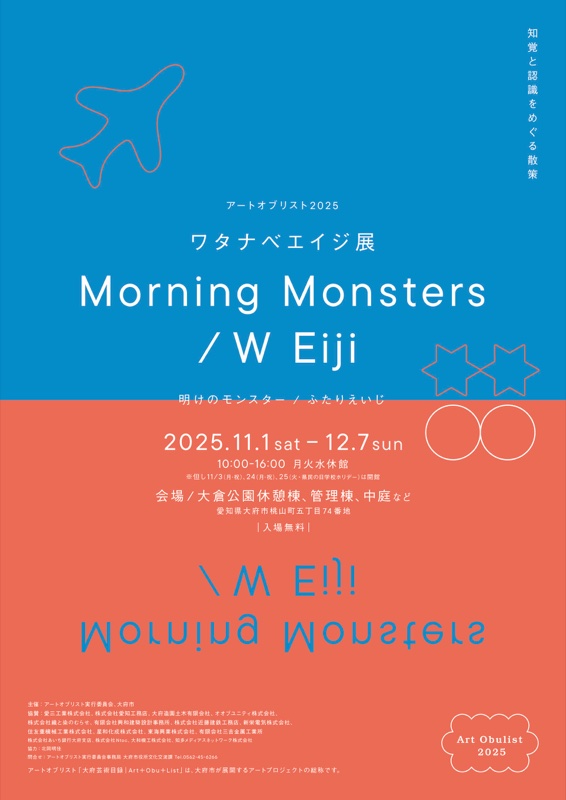
Art Obulist 2025 Eiji Watanabe Exhibition “Morning Monsters / W Eiji”Art Obulist 2025 ワタナベエイジ展「Morning Monsters / W Eiji」
Morning monsters, two Eijis. The neuroscientist’s exhibits in the Management Building, the artist’s works in the Rest Building, and the paths of an autumn park joining the two.
- Dates
- Saturday, November 1 – Sunday, December 7, 2025. The exhibition has ended.
- Hours
- Thursday to Sunday and national holidays, 10:00–16:00. Closed Monday to Wednesday (open on November 3, 24 and 25)
- Venue
- Okura Park: Management Building, Rest Building and courtyard (Momoyama-cho, Obu, Aichi)
- Admission
- Free
- Organizer
- Art Obulist Executive Committee, City of Obu
- Planning / Production
- Satsuki Yamamoto + Art Obulist Executive Committee
- Committee chair
- Eiji Watanabe (artist)
- Special thanks
- Akiyoshi Kitaoka, Seiji Bon
- Theme
- “Perception” and “recognition”
The exhibition drew the largest attendance in the history of Art Obulist. The title “Morning Monsters” fuses the names of the artist’s solo exhibition “Morning Star” (2024) and the scientist’s optical illusion “Morning Monster” (2020).
Art Obulist (Art + Obu + List, “a list of art from Obu”) is the collective name for the art projects run by the City of Obu. 2025 marked its tenth anniversary.
Venue会場構成
Two buildings in Okura Park, joined by the real space of the park itself. Visitors set out from the science side, walk through the park, and arrive on the art side.
- 1
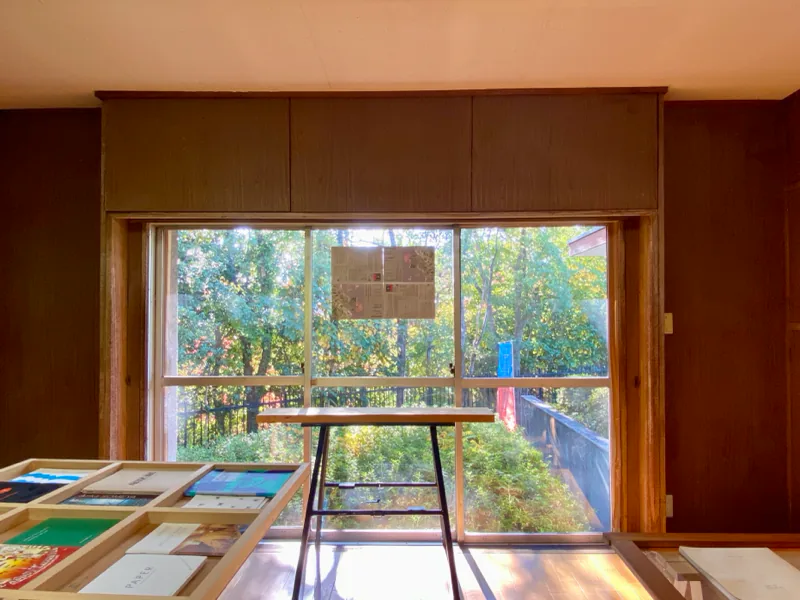
The “Okazaki Genkikan Illusion” box on a window of the Management BuildingPhoto courtesy of Art Obulist Executive Committee Management Building: Eiji Watanabe (neuroscientist). Optical illusions, the question-box corner, 17 handwritten notebooks and the evolution simulator, with a wall diagram of the “stream of evolution” on the back wall.
- 2
The thatched gate, hung with a noren curtain and banners
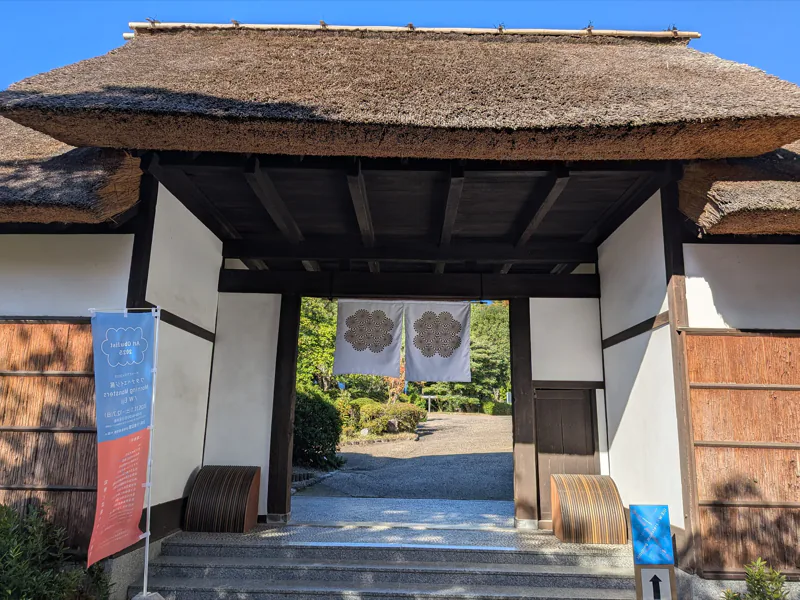
The noren curtain and banners on the thatched gate, Okura Park, 2025.11.22Photo courtesy of Art Obulist Executive Committee - 3
The central plaza
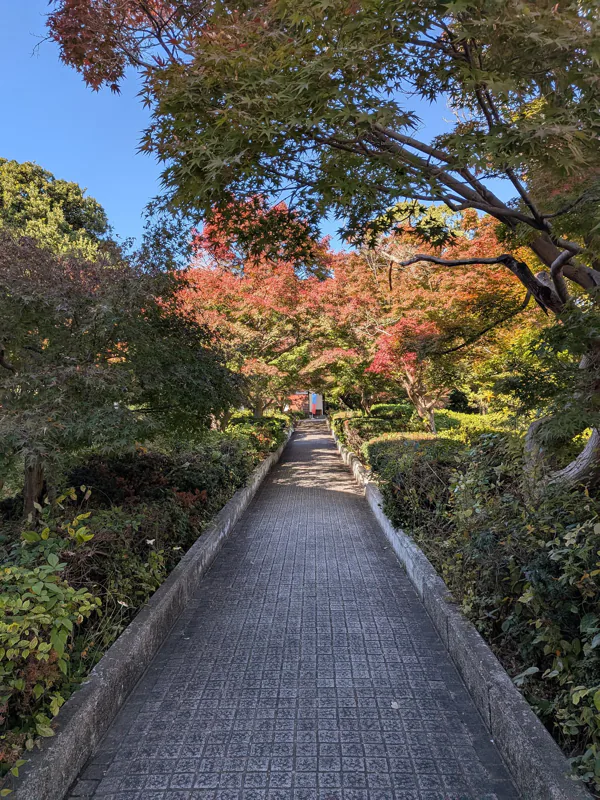
The park path in autumn colors, with the banner on the gate beyond, 2025.11.22Photo courtesy of Art Obulist Executive Committee - 4
The inner gate. Cut-outs from “Tunnel of Eden” mark the path
- 5
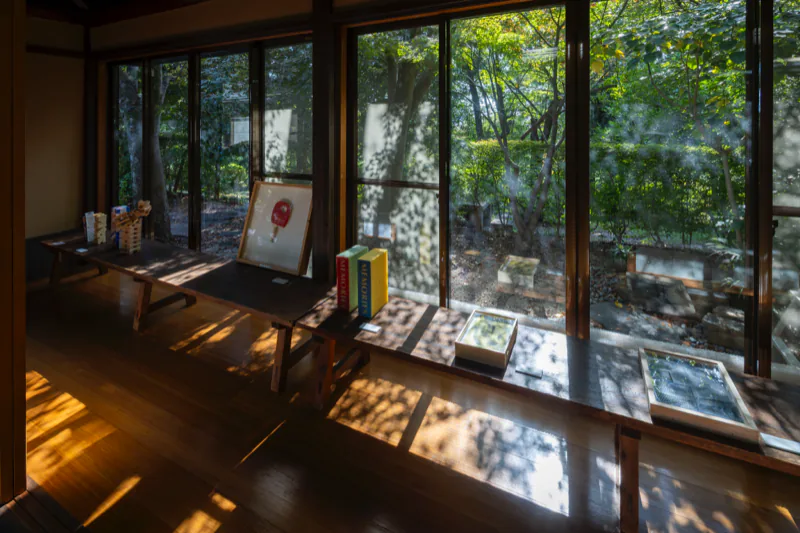
The windowsill of the Rest Building: ⑰ Miracle Ball, ⑲ Handmade, ⑳ Memories, ㉑ JengaPhoto: Kenji Aoki Rest Building: Eiji Watanabe (artist). 24 works, with “Sea of Eden” and “Names of Stars” in the tatami rooms.
- 6
The hut in the courtyard, “mo n do ri – an transformed”: home to the mamedoi pop-up café, Tiny shop the W Eiji and the performances
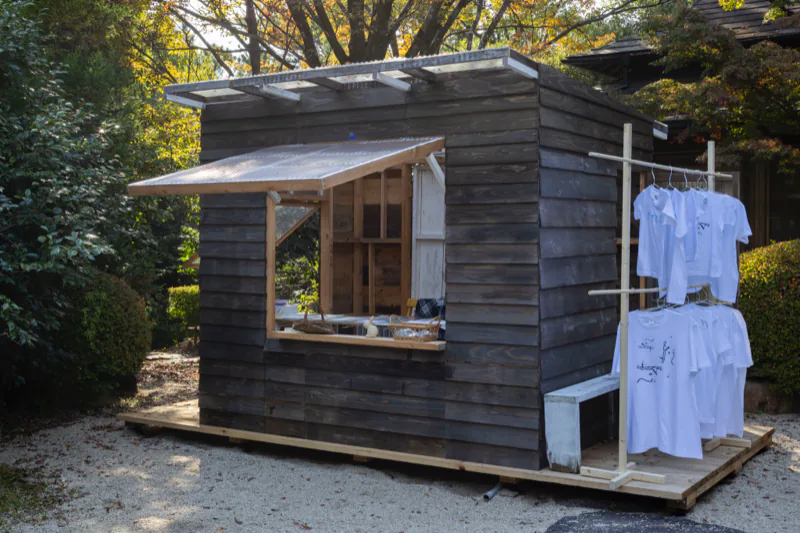
㉔ “mo n do ri – an transformed” and Tiny shop the W EijiPhoto: Kenji Aoki
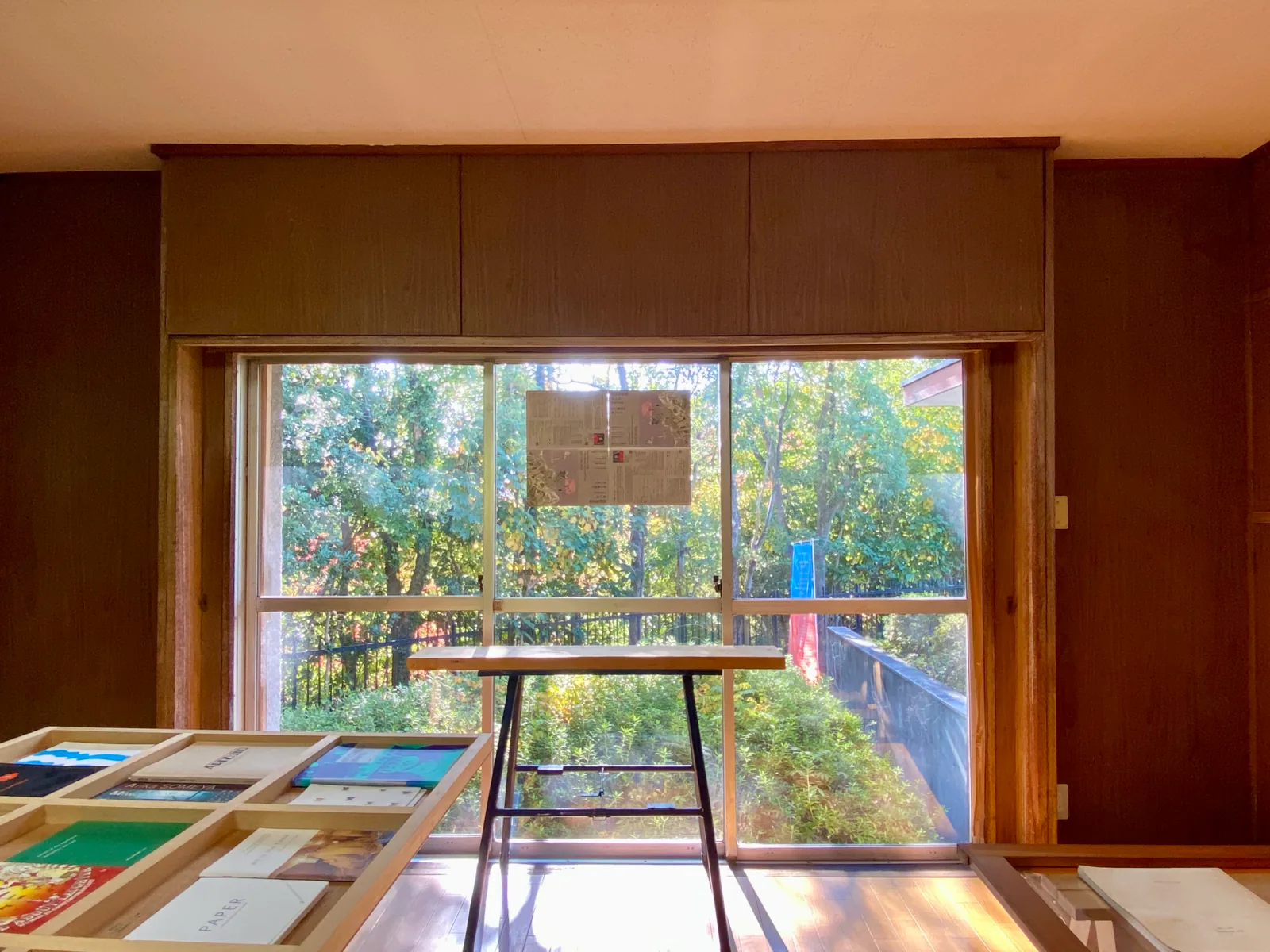
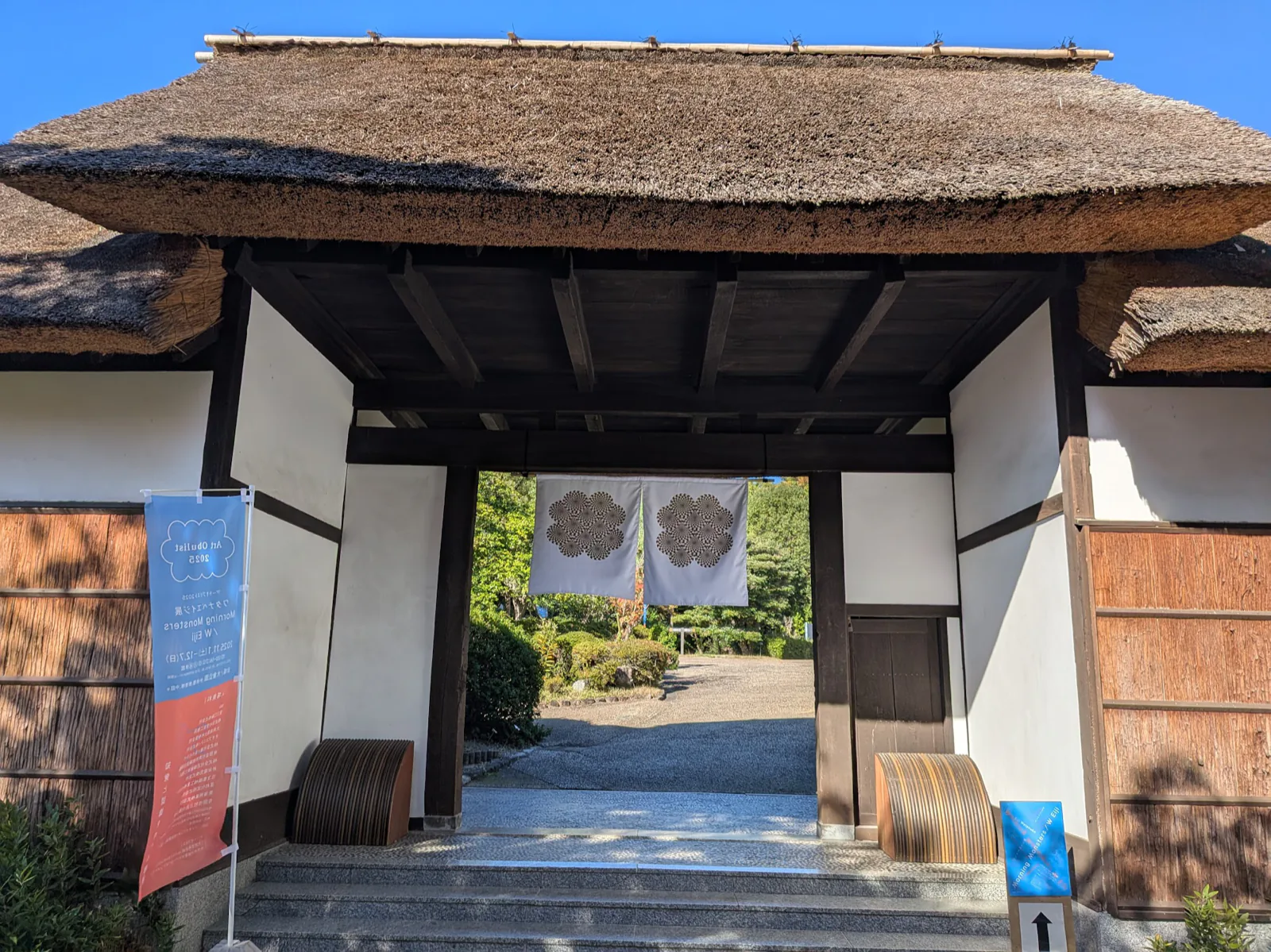
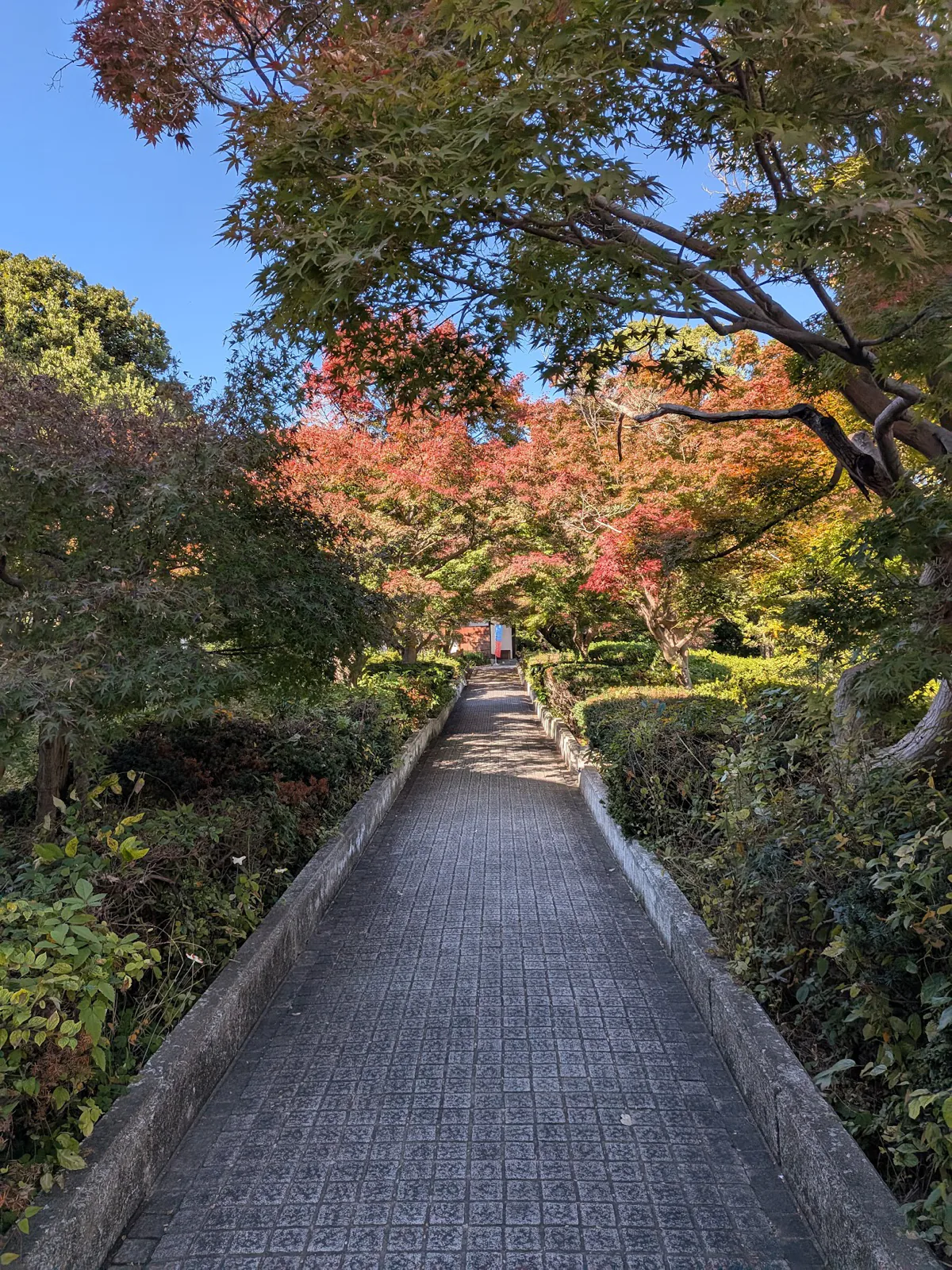
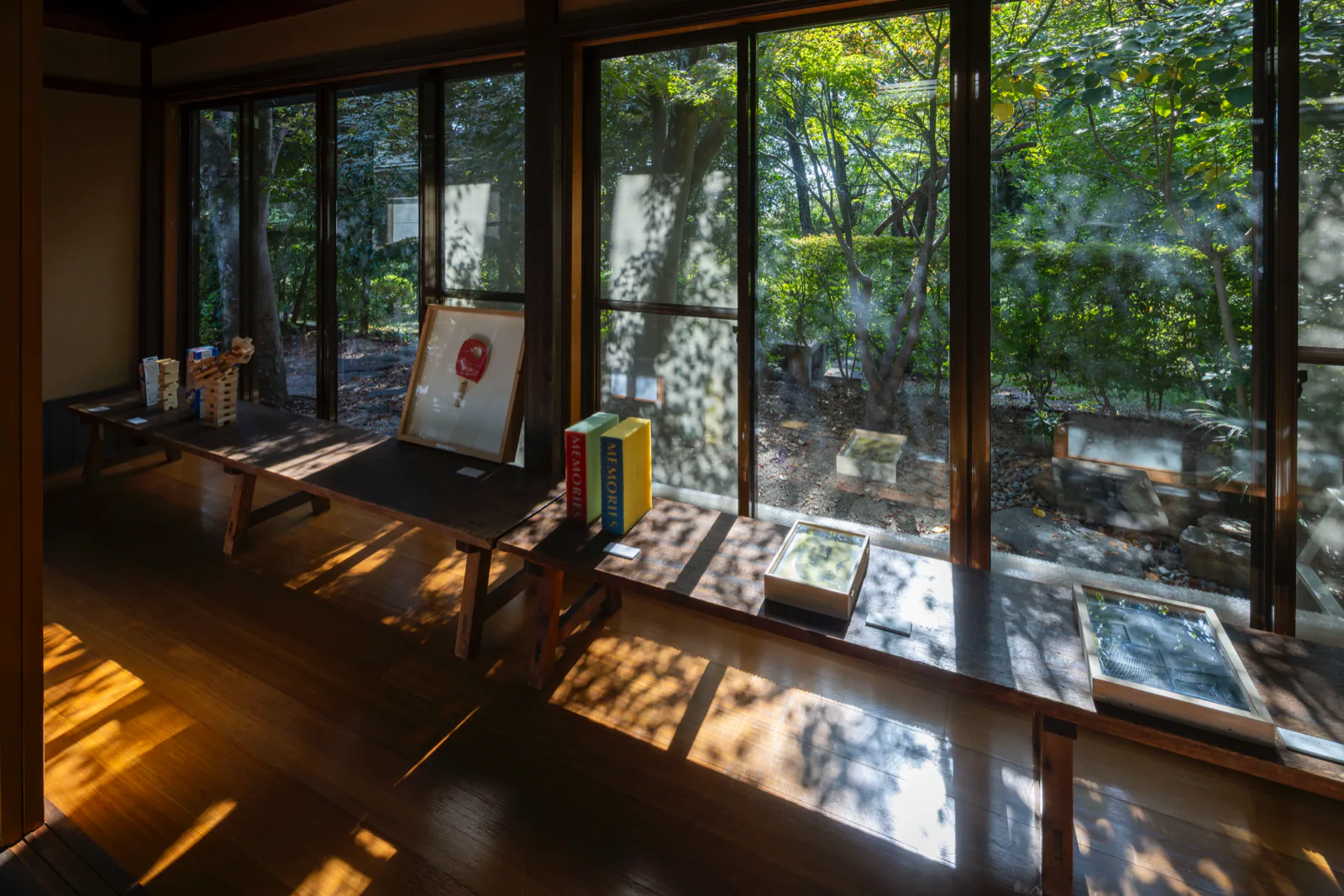
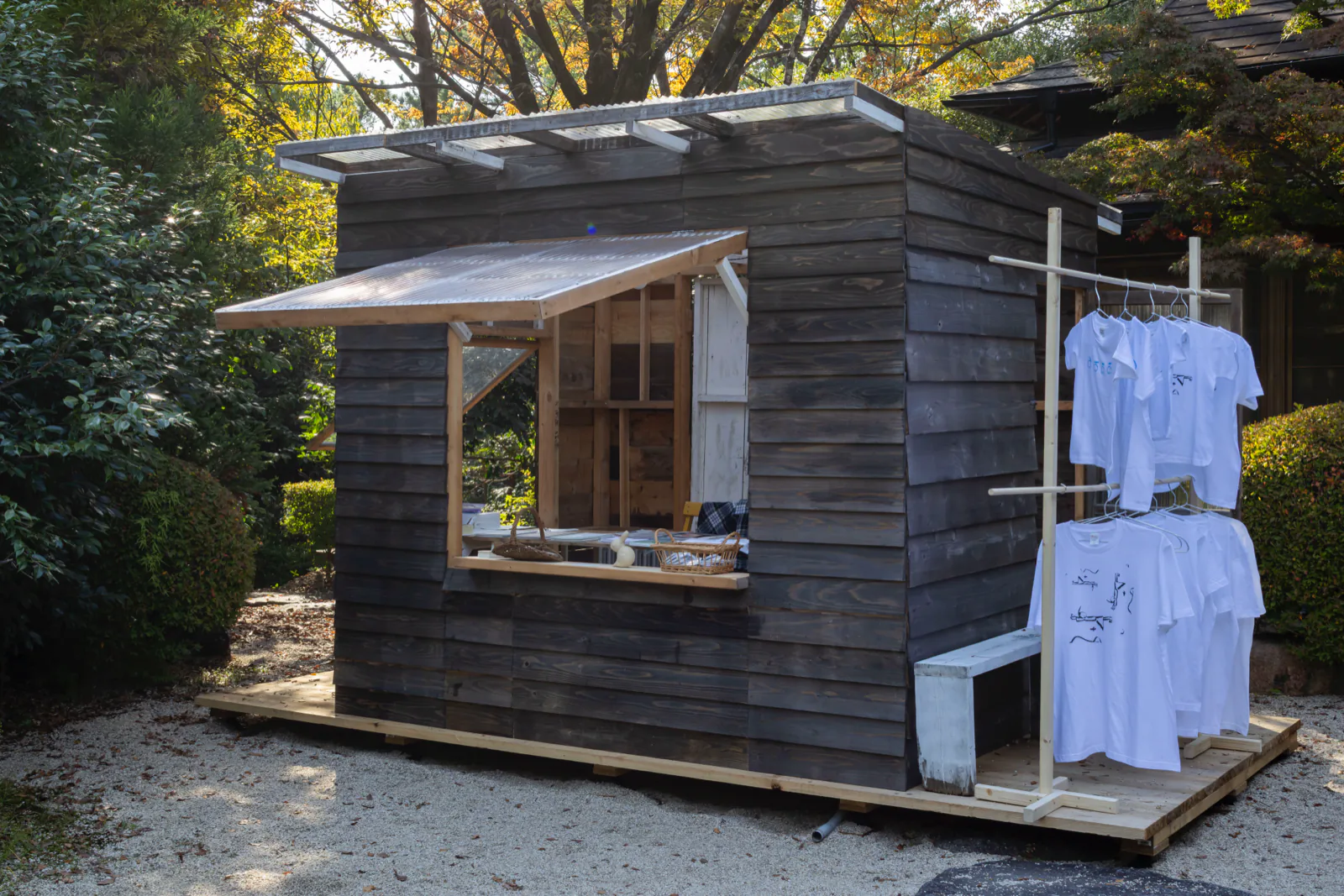
The real-life circuit in the autumnal Okura Park, from the administration building to the recreation building, leading through a thatched gate, across the central plaza, and through another, smaller gate, was the ultimate alternative space.
Crossings二人の交差点
-
Funhouse
A hut in which balls roll uphill, built by the artist. The scientist never saw it being built.
The scientist’s proposal. The mismatch between what the eyes see and what the sense of balance reports makes a physically impossible event seem to happen.
The only joint work
-
Toilet paper, left and right
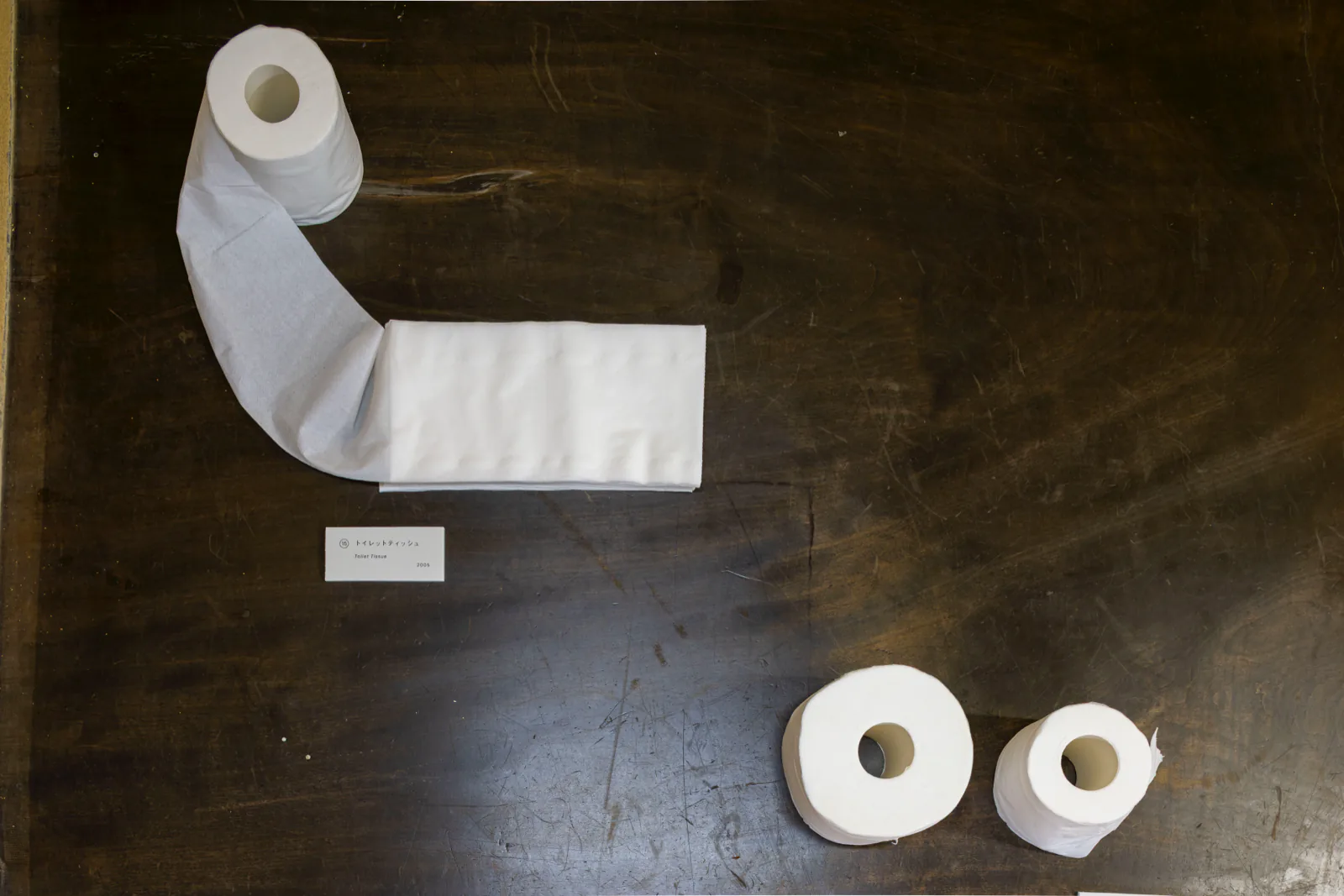
On the left, the artist’s ⑮ “Toilet Tissue.” A single roll of toilet paper that runs on into the shape of tissue paper is a question of language.
On the right, “Ebbinghaus Illusion” (the artist’s list of works, ⑯; presented by the scientist). Two rolls whose cores appear to differ in size are a question of perception.
So the right is science and the left is art. The same material, though.
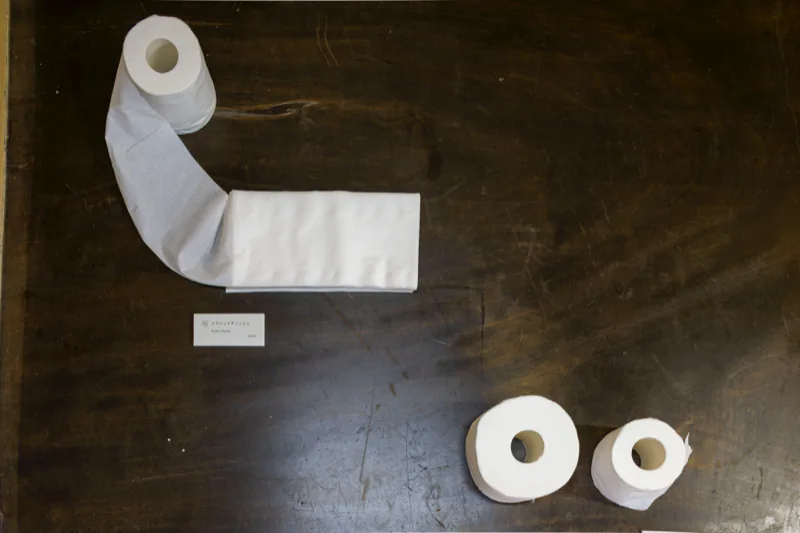
Left, ⑮ “Toilet Tissue” (made by the artist); right, ⑯ “Ebbinghaus Illusion” (presented by the scientist)Photo: Kenji Aoki The same material, read two ways. Satsuki Yamamoto saw in this pairing the difference between “what am I looking at?” and “what am I being shown?”, and called it emblematic of the whole exhibition.
-
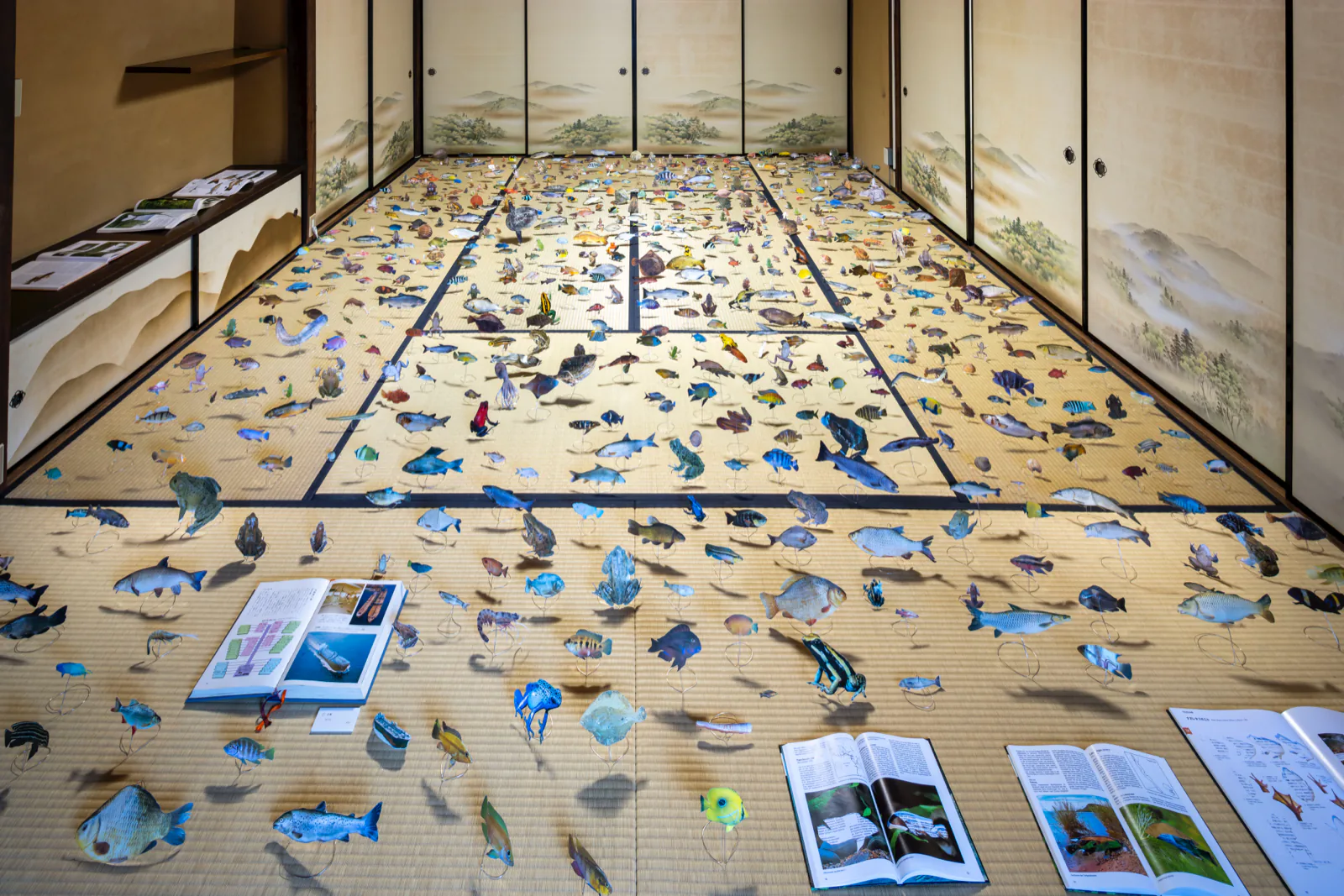
Sea of Eden
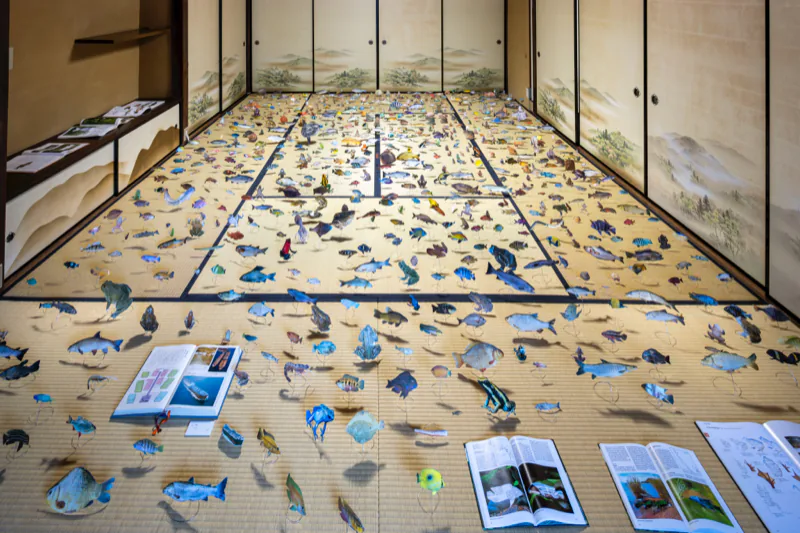
⑥ “Sea of Eden,” in the tatami room of the Rest BuildingPhoto: Kenji Aoki Fish cut out of illustrated encyclopedias, spread across a tatami room.
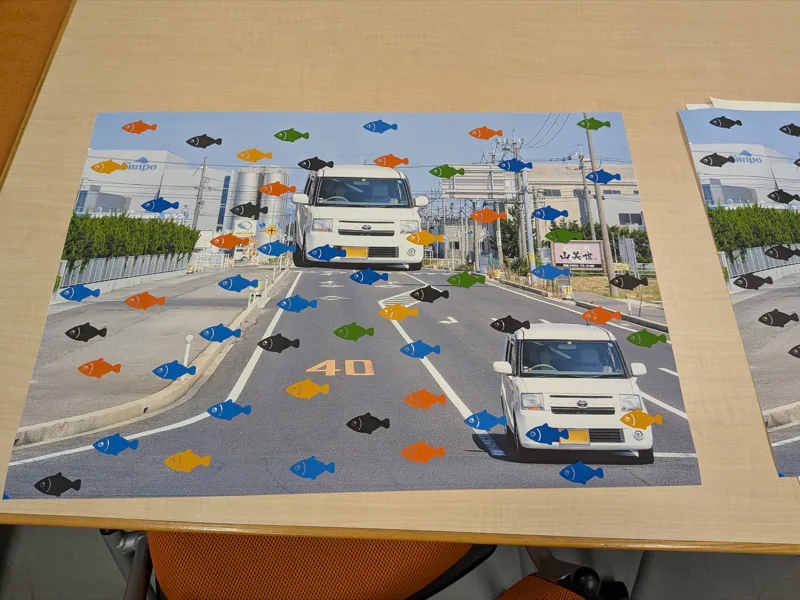
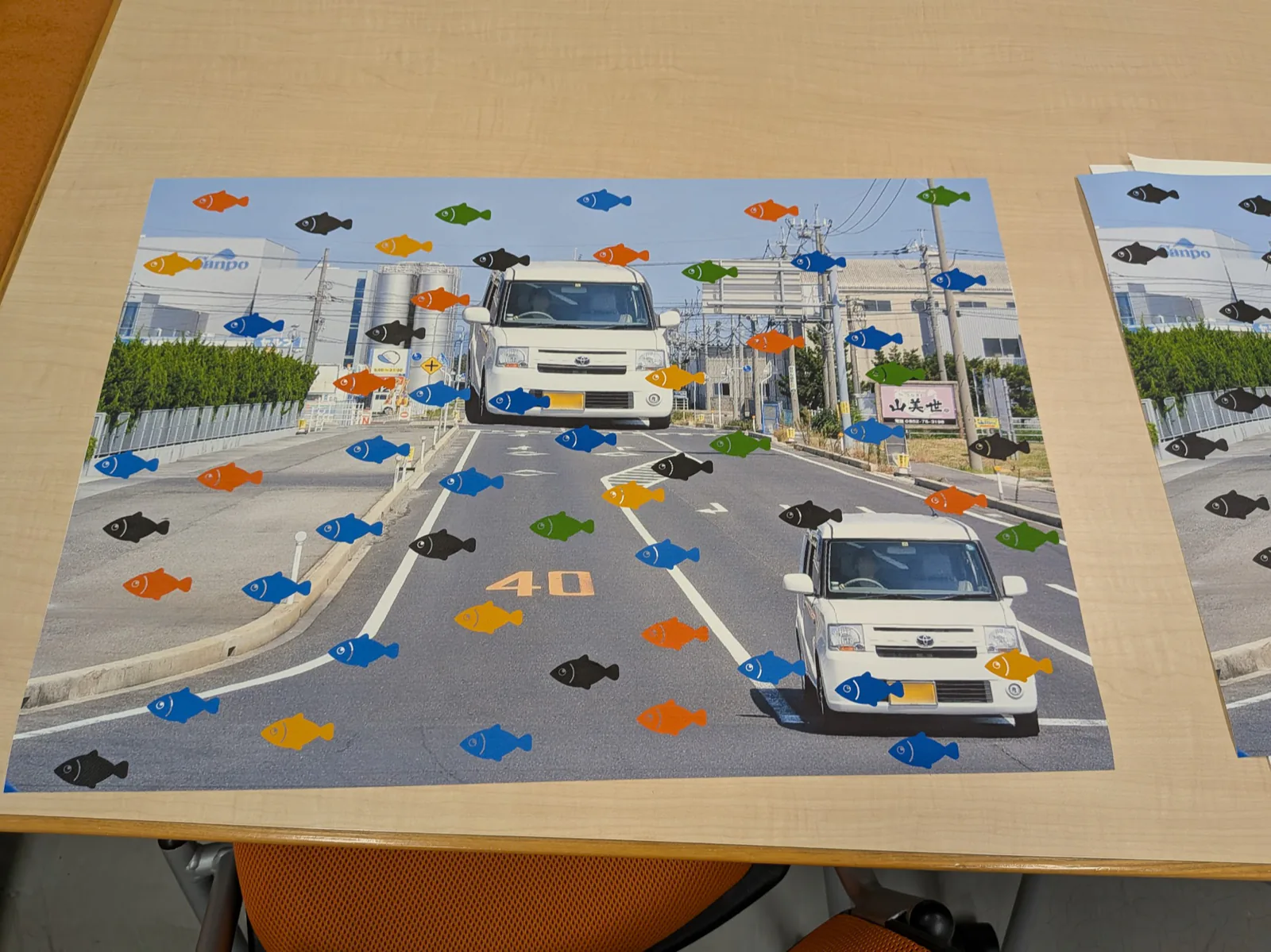
“Sea of Eden, Fish Liberated from Optical Illusion,” test printPhoto courtesy of Eiji Watanabe (neuroscientist) / Illusion image: Akiyoshi Kitaoka ⑫ “Sea of Eden, Fish Liberated from Optical Illusion.” Seeing the artist’s “Sea of Eden,” the scientist wondered whether “there is some place where the roots coincide,” and added a new illusion during the exhibition. In the “big car” illusion, perspective changes the apparent size of the cars, while the fish, on a layer of their own, stay the same size.
-
Butterfly’s-Eye View
The artist’s work “Butterfly’s-Eye View,” a series of butterflies cut out of illustrated encyclopedias.
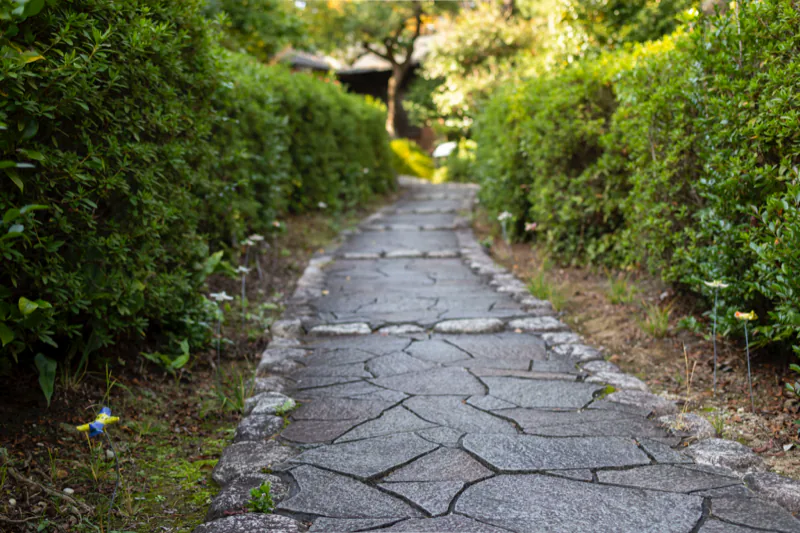
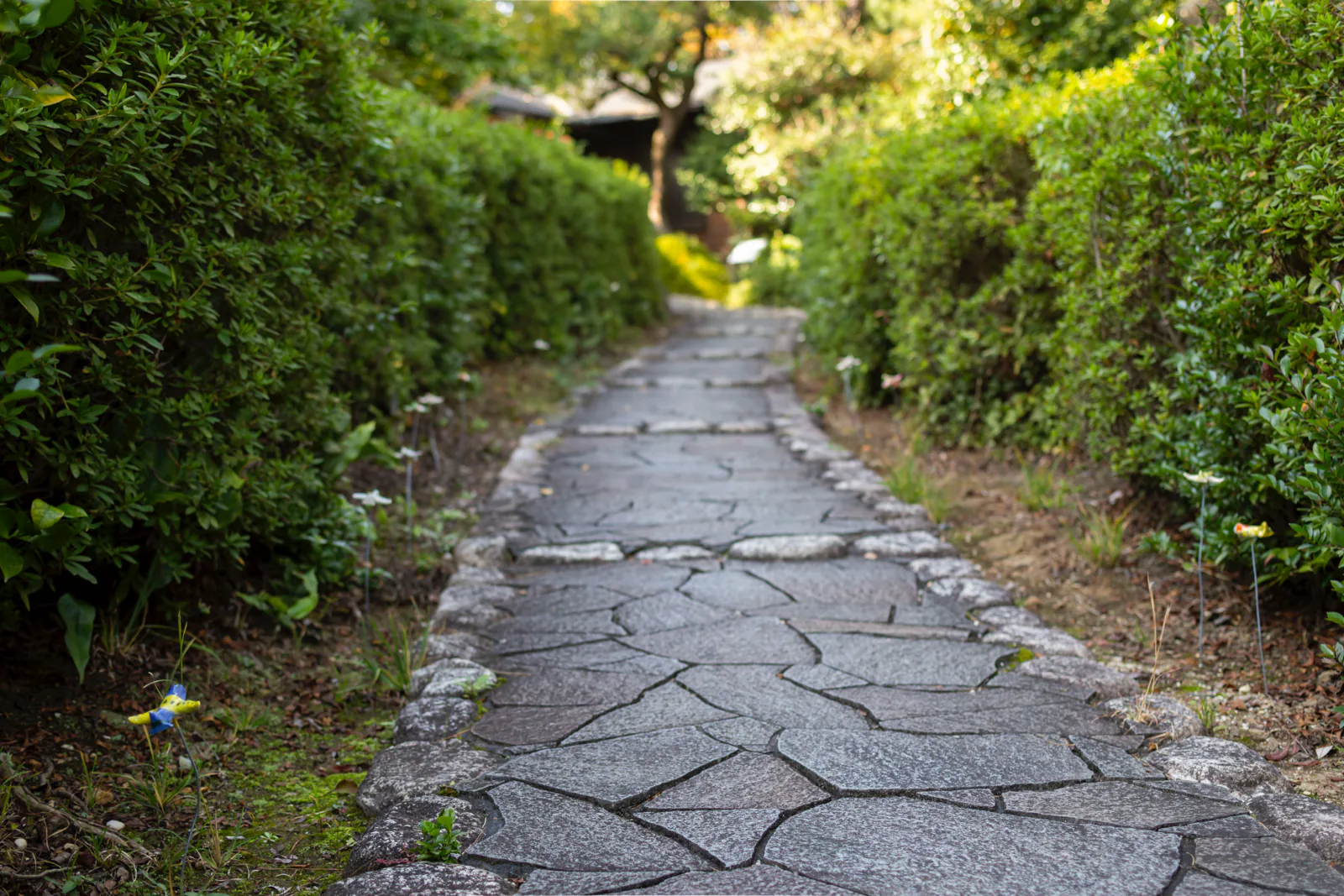
“Tunnel of Eden,” the path joining the two buildingsPhoto: Kenji Aoki The scientist’s list of works: ⑯ “Tunnel of Eden.” An homage from the scientist to the artist: the butterflies of “Butterfly’s-Eye View” mark the path between the Rest Building and the Management Building.
-
A colorful world on waking
The experience the artist had at 28, when he felt that he had “understood.”
The scientist’s answer to a question from the question box, “What inspired you to do research in this field?”
When I wake up in the morning and open my eyes, what I see is a magnificent, colorful world. To me, this is a very mysterious thing.
The two experiences coincided: the words that bound the two together
Photos記録写真
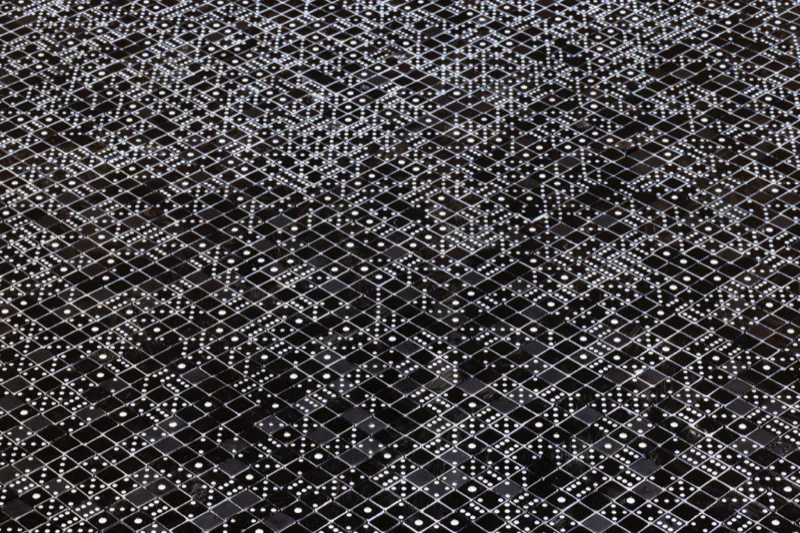
⑬ “Names of Stars”Photo: Kenji Aoki 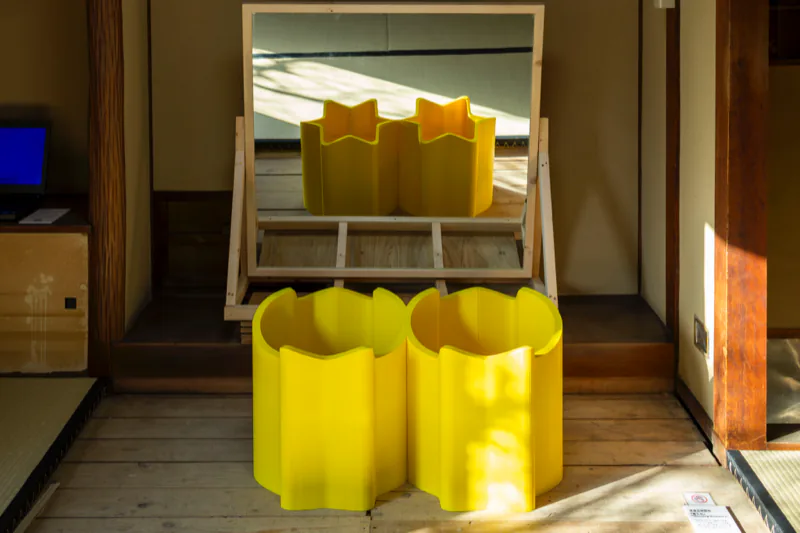
② “Transforming three-dimensional object (stars and circles),” Management BuildingPhoto: Kenji Aoki / Invented by Kokichi Sugihara (mathematician) 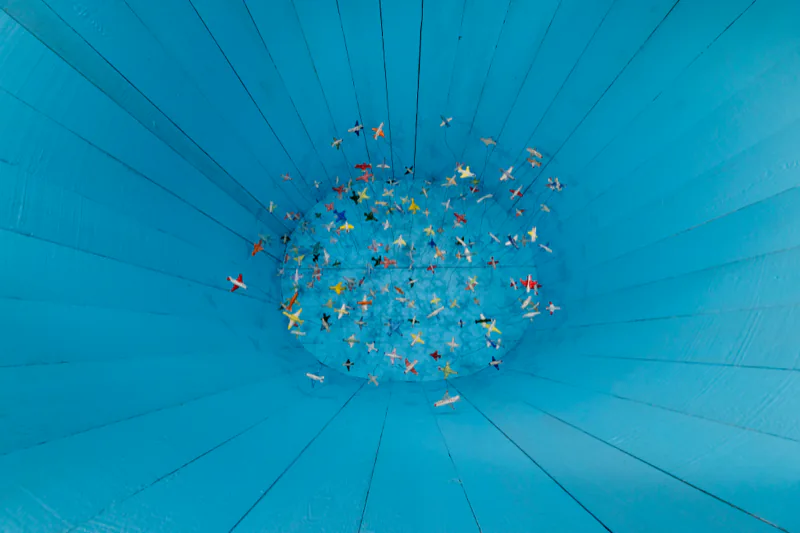
④ “Dream of the Sky / Above the Sky”Photo: Kenji Aoki 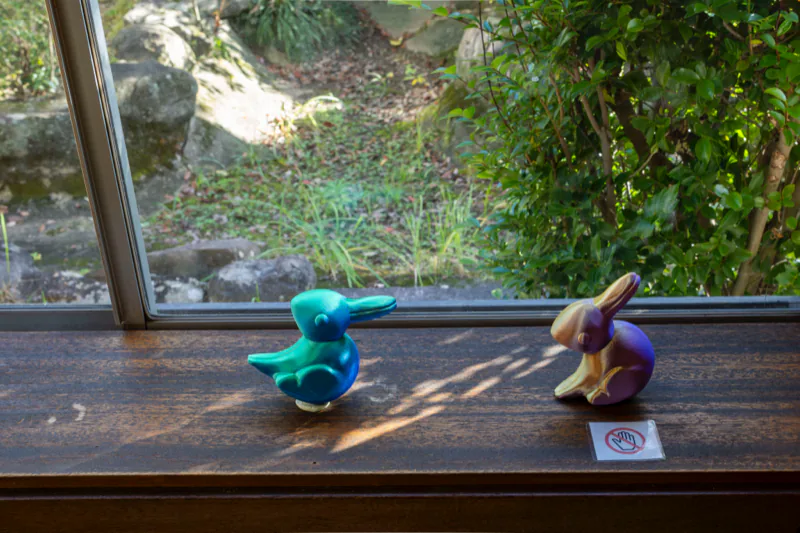
⑪ “Transforming three-dimensional object (rabbit/duck),” 3D-printed, Management BuildingPhoto: Kenji Aoki The scientist’s list of works: ⑪
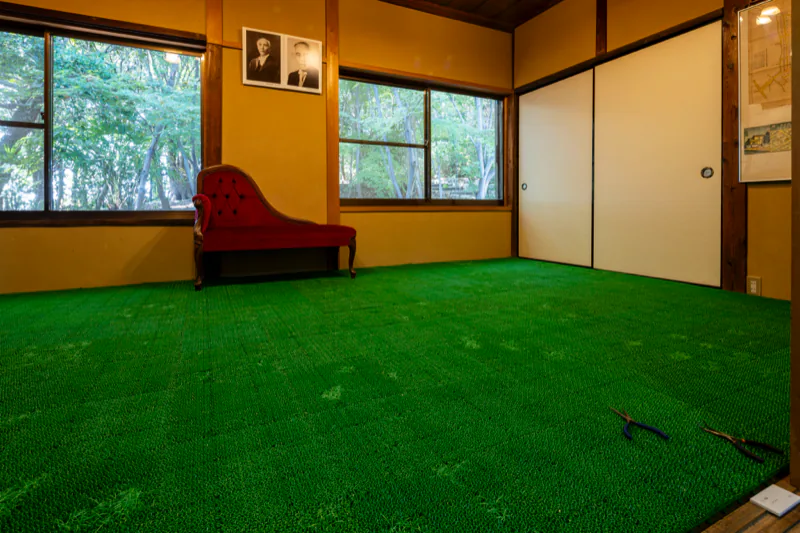
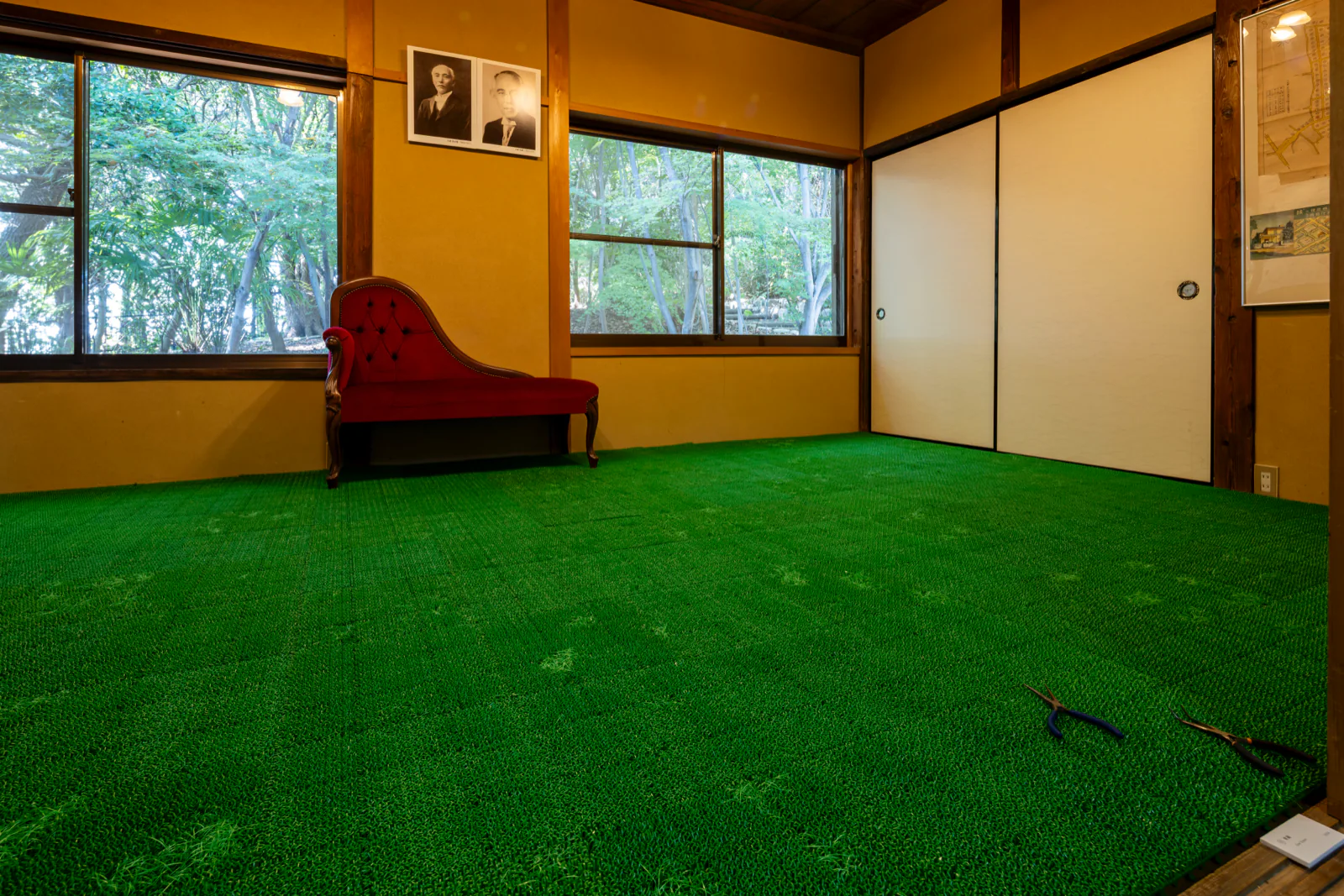
⑪ “Ever Green”Photo: Kenji Aoki The artist’s list of works: ⑪
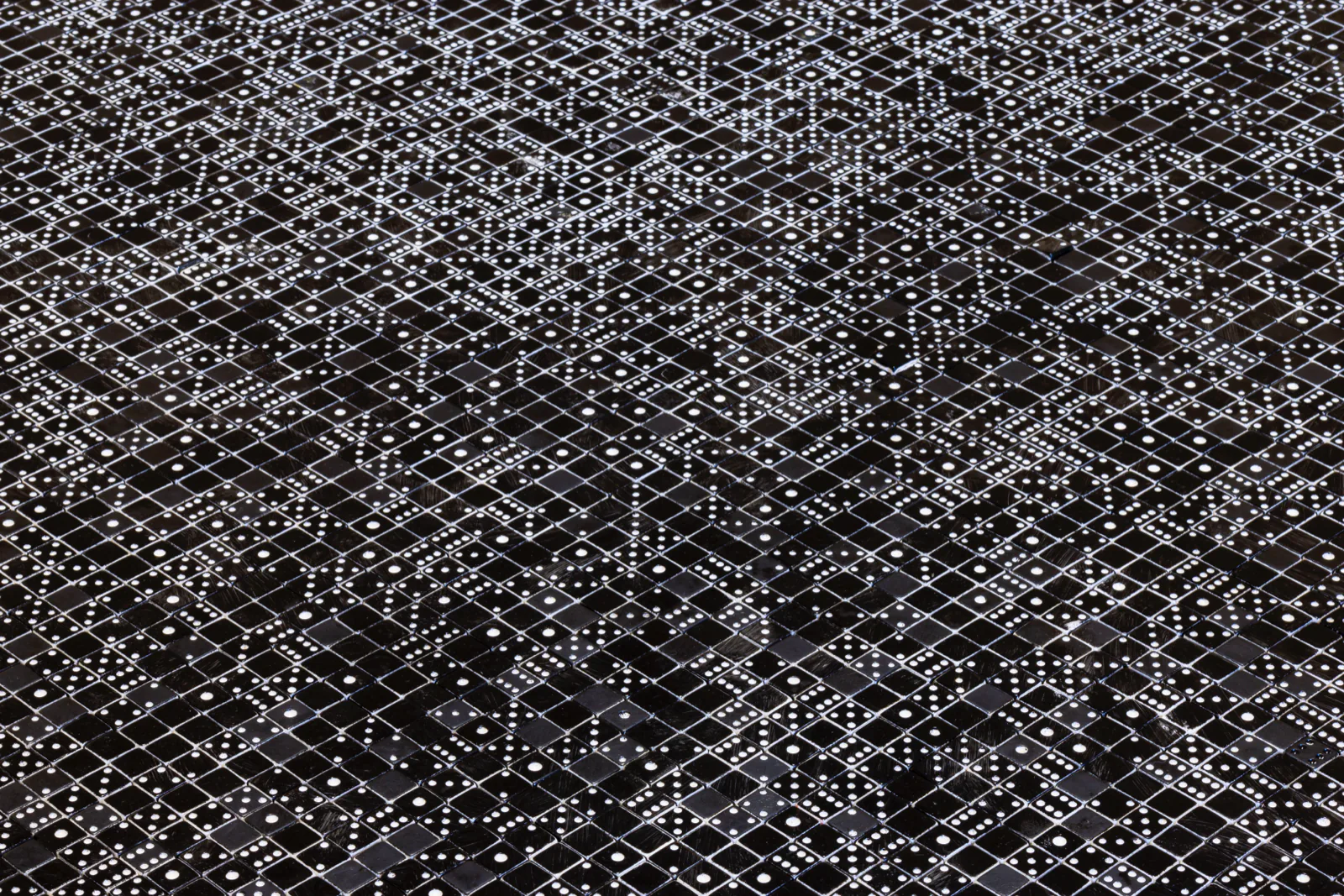
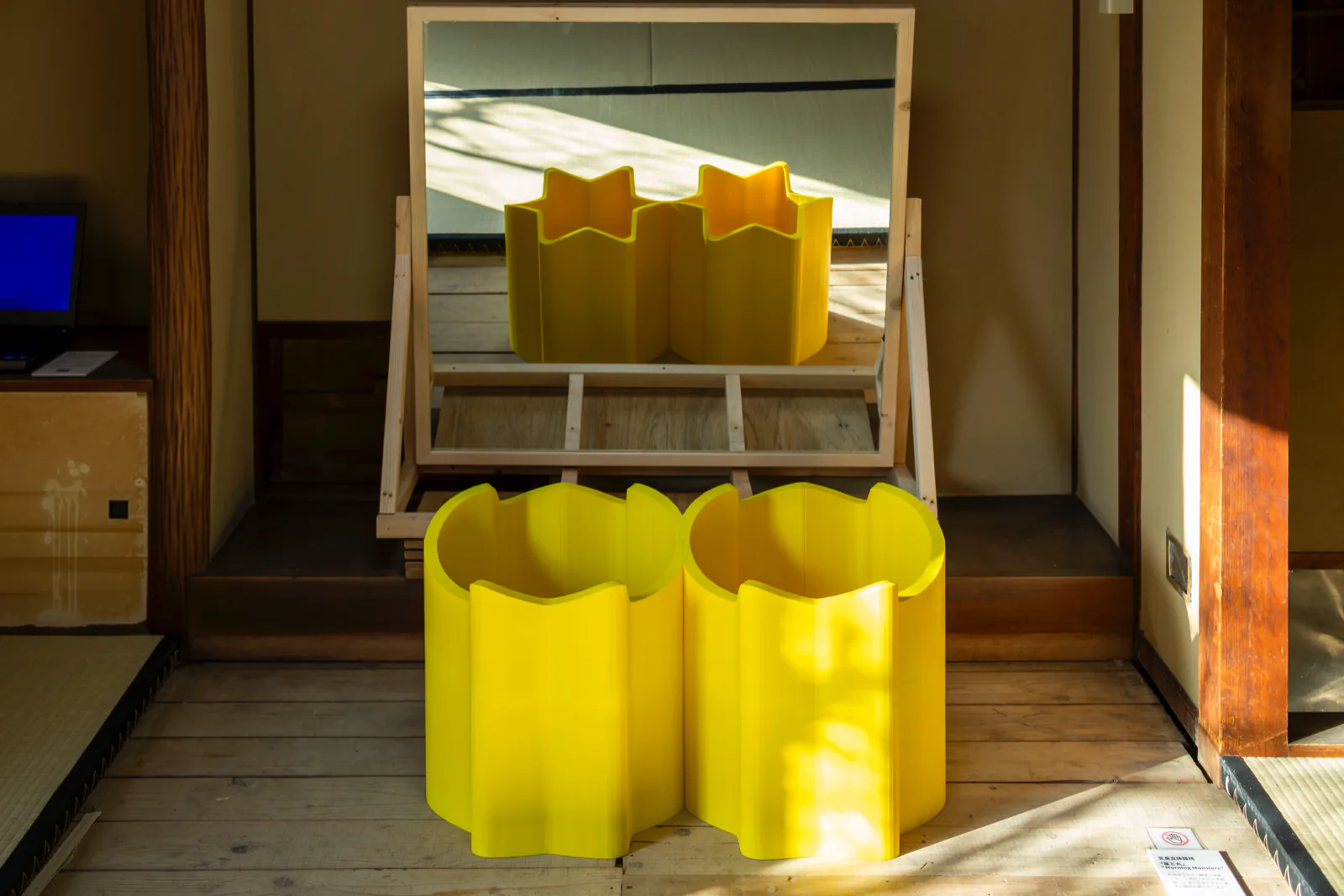
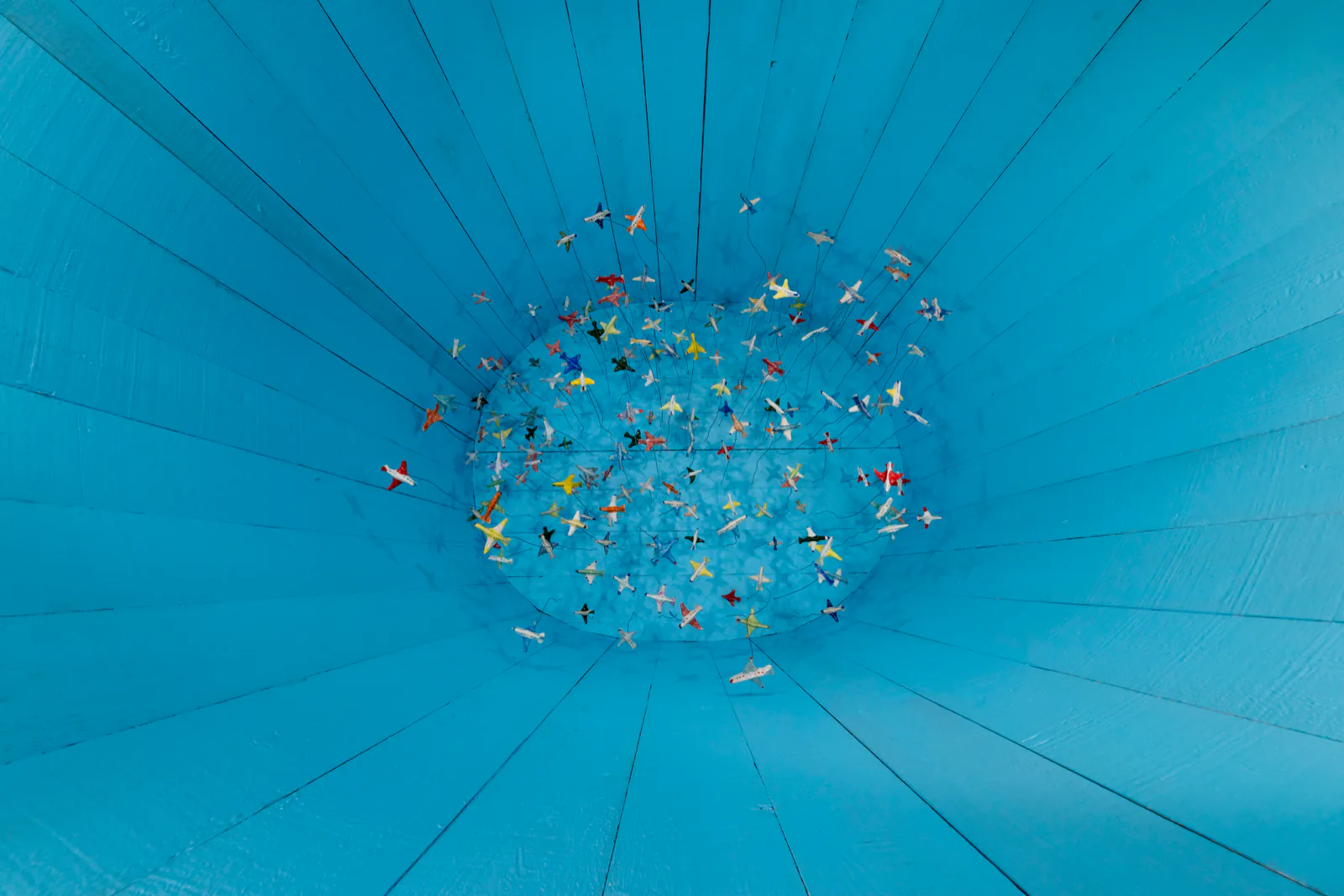
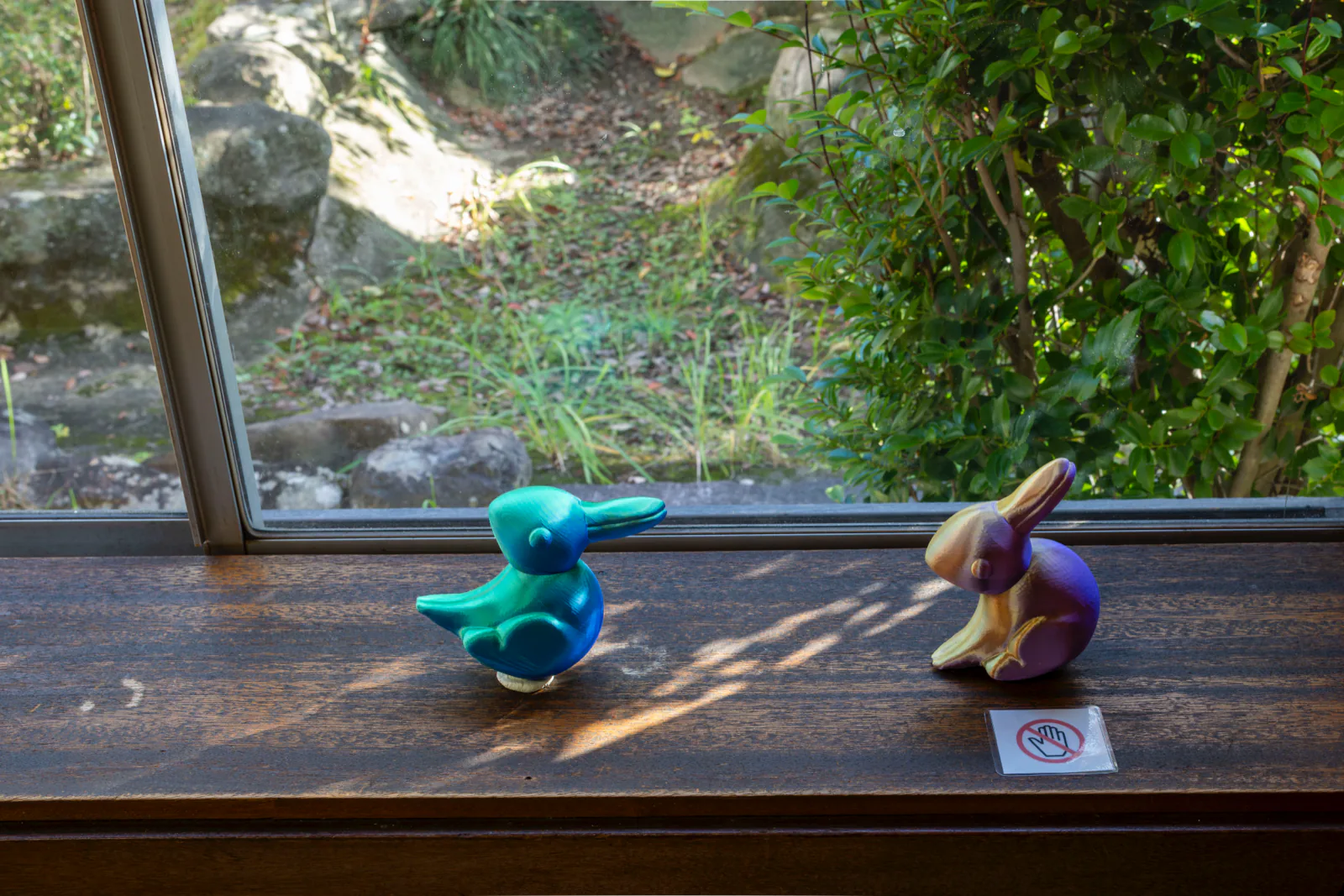
Click a photo to open it. Photos of the venue and the crossings are in the sections above; photos of the events are on the Related events page. Of the 734 original photographs, 14 documentary photographs and 1 flyer are shown here.